
Why your bathroom scale is lying to you (and 3 ways to fix it)
We’ve all been there.
You eat perfectly all week, crush your workouts, and step on the scale Friday morning expecting a celebration. Instead, the number went up two pounds. Your day is ruined, and you want to throw the scale out the window.
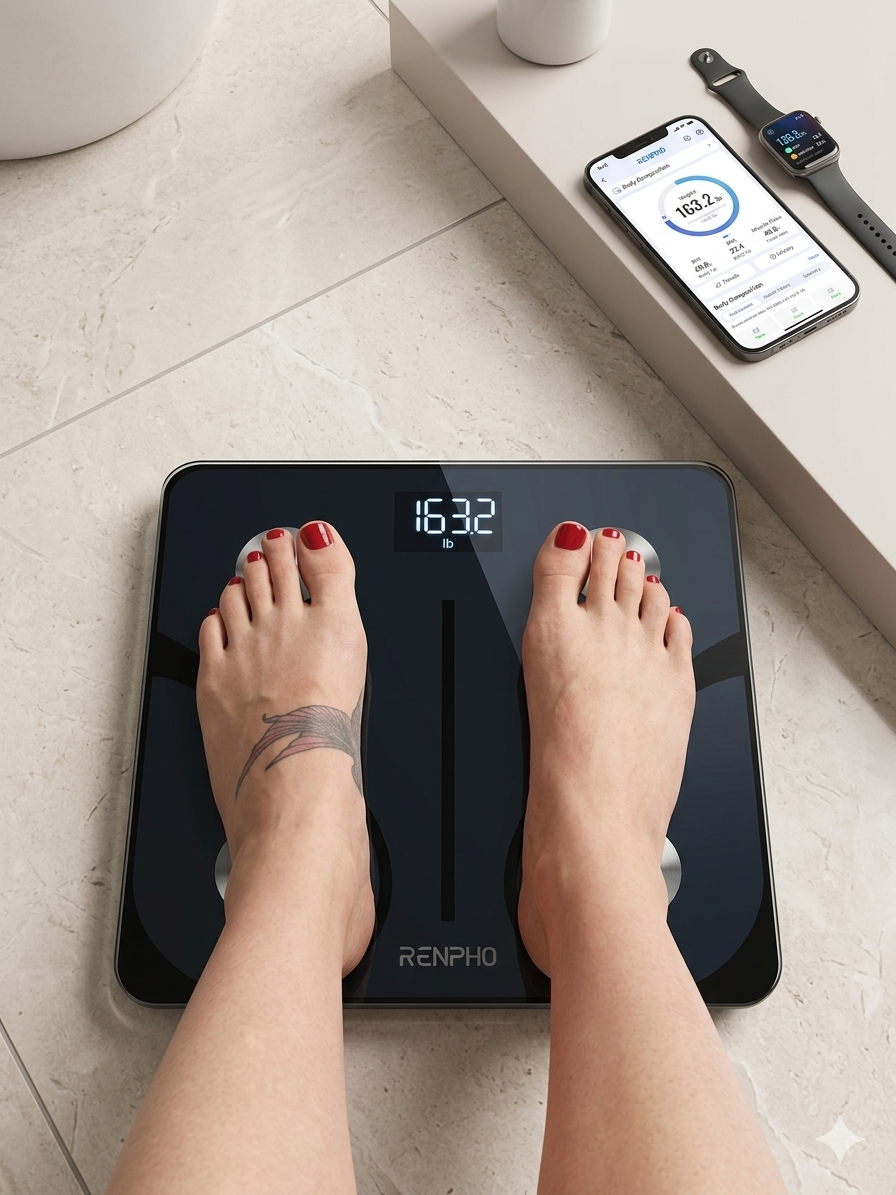
Here is a liberating truth: that single number is lying to you.
Clinical research shows daily body weight can fluctuate by up to 2.2 to 4.4 pounds (1 to 2 kg) purely due to water retention, glycogen storage, and digestion. In fact, for me, mine is about 4-7lbs (when I pound a pizza and cookies the previous night, the scale goes WAY up, largely contributed by the increase in the volume of food I ate). Relying on a random weekly weigh is stupid. I’m just being honest.
If you are obsessed with the scale, it’s time to stop. You can ignore that daily number unless you start doing these three things.
Create a "Clean Slate" Routine
If you weigh yourself at 4:00 PM on Tuesday after lunch, and then at 7:00 AM on Saturday, you aren't tracking real progress. You’re just tracking your meals.
To get an accurate baseline, look at the scale every morning, first thing, after using the bathroom, with no clothes on. This eliminates variables and isolates your actual body mass.
Look at Weeks, Not Days
Because your body is roughly 60% water, a salty dinner or a stressful day spikes cortisol, causing your body to hold onto fluid. That isn't fat; it's just biology.
Instead of stressing over daily spikes, look at your 7-day rolling average. Add up your daily weights for the week and divide by seven. Studies show that people who track weekly averages rather than single days experience significantly less weight-anxiety and are more successful at long-term maintenance. If the weekly average is moving down, you are winning.
Protect Your Muscle (The Metabolism Secret)
Losing weight is great, but losing the wrong weight will ruin your metabolism.
When you cut calories, your body burns both fat and skeletal muscle for energy. If you lose muscle, your resting metabolic rate (RMR) drops—meaning you burn fewer calories just by existing. This sets you up to regain the weight rapidly.
The 25% Rule: Muscle loss should never exceed 25% of your total weight loss.
If you lose 4 pounds, a maximum of 1 pound should be lean muscle mass. If you drop more than that, your body is literally using your muscle as energy - when this happens, YOUR METABOLISM SLOWS DOWN.
To prevent this, you need to consume 1 gram of protein per pound of body weight (or goal body weight) daily and adding strength training.
If your scale doesn’t measure anything beyond the basic number on the scale, you need a new scale. It’s less than $25, and give you the data you need!

This scale syncs directly to an app, automatically calculates your 7-day averages, and monitors your lean muscle mass to ensure your metabolism stays FIRE.
Grab the Renpho Smart Scale on Amazon and stop letting a single number ruin your morning.
Also - it’s okay if it bugs you sometimes - it bugs me too sometimes:)