
What protein powder do I choose?
As a nutrition coach, nothing is more frustrating than seeing people put in hard work at the gym, only to unknowingly stall their progress with a supplement disguised as a health food. And if you’re not hitting your daily protein goal for optimal FAT LOSS, here’s five reasons you SHOULD be, and different ways you can consume it:)
Many popular protein powders on store shelves are essentially glorified desserts. Brands like Herbalife, Shakeology, and certain weight-loss lines often pack their tubs with hidden sugars, extra calories, and cheap thickeners. Instead of a clean fuel source, you end up drinking a liquid cookie that spikes your blood sugar, increases cravings, and slows fat loss.
The 70% Protein Rule: How to Spot Quality
Before buying any protein powder, check the label and run one simple calculation: aim for at least 70% protein by weight per serving.
PROTEIN PERCENTAGE = (Grams of protein/total scoop weight in grams) x100
When a formula falls below 70% protein, the remaining 30%+ of that scoop is filled with:
Added Sugars & High Carbs: Unnecessary calories that cause blood sugar spikes.
Artificial Fillers: Gums, thickeners, and cheap flavorings that add bulk without nutritional value.
Low-Quality Protein Blends: Cheaper ingredients that aren't absorbed as efficiently by your body.
Less Value: You end up paying top dollar for processed powder rather than actual protein.
How My Protein Compares to Top US Brands
To see how commercial brands measure up to mine, let's look at three of the top-selling protein powders in the United States:
Optimum Nutrition Gold Standard 100% Whey
Dymatize ISO100
Orgain Organic Plant-Based Protein.
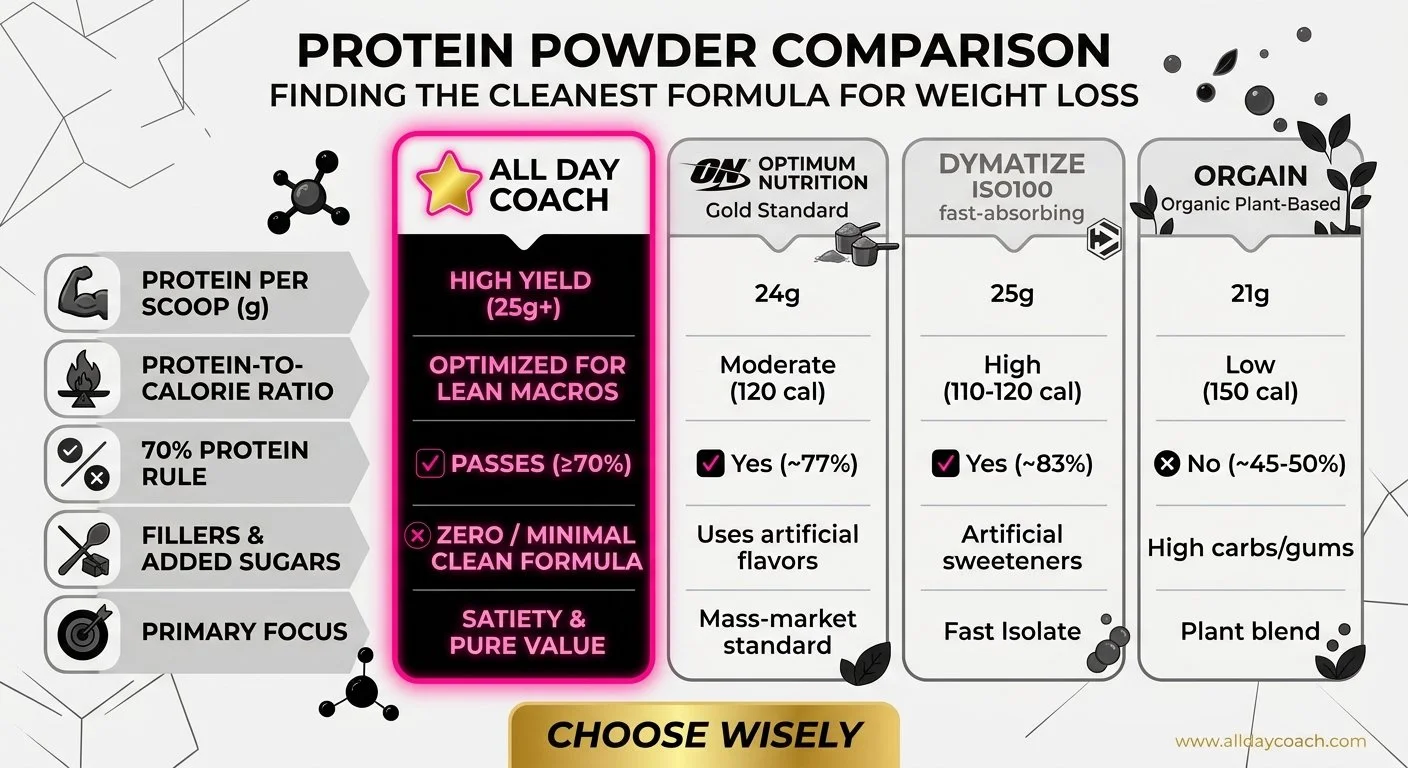
Why All Day Coach Fits Your Goals Better
While mass-market brands focus on shelf appeal, mass distribution, or mimicking milkshake textures with artificial additives, mine is formulated specifically around my practical coaching principles:
Maximum Protein, Minimum Filler: Every scoop delivers dense, highly bioavailable protein with minimal calories from fat or carbs. You aren't paying for empty fillers or excess sweeteners.
Support for Weight Loss: By focusing on a lean protein-to-calorie ratio, it promotes fullness and muscle retention without blowing your daily macro budget.
True Cost-Per-Gram Value: Instead of cheap ingredients disguised by high serving weights, you get a clean label where every dollar spent goes directly toward pure protein.
Smart Shopping Checklist
Whenever you choose a supplement, keep these five standards in mind:
Calculate the Protein Percentage: Ensure protein makes up at least 70% of the total scoop weight.
Watch the Protein-to-Calorie Ratio: Aim for high protein relative to low overall calories (e.g., 25g protein for ~120 calories vs. 15g protein for 250 calories).
Check for Hidden Sugars: Keep added sugars as close to 0g as possible.
Evaluate Price Per Serving: Compare products based on cost per gram of actual protein, not container size.
Food First, Supplements Second: Treat protein powder as a convenient tool to hit your daily targets alongside a solid whole-food diet.