
How to eat out every week and still lose weight
Whether you’re a busy professional meeting clients over lunch or someone whose social life revolves around being a foodie - "eating out" doesn't have to mean you can’t achieve your health goals!
While it’s easier to lose weight when you can cook all of your own meals, we also know that’s not always realistic.
If you find yourself eating out more than 2x/month, you need to master the Anchor Meal strategy. When you know a large, calorie-dense restaurant meal is in your future, the rest of your day needs to be built on three pillars: Low Calorie, High Protein, and High Fiber.
Here is the simple science of why this works and how to do it.
The "Fullness" Science: Protein & Fiber
When you eat out, restaurant meals are often high in fats and refined carbs (think oils, butters, and white breads). These are "passive" calories—they taste great but don't signal your brain to stop eating.
To counter this, your other meals should focus on:
* Protein: It suppresses ghrelin (your hunger hormone) and boosts peptide YY, which makes you feel full.
* Fiber: It physically slows down digestion by adding bulk to your stomach.
The Data: Research shows that a high-protein meal can keep you satisfied for 3–5 hours, whereas a high-carb, low-protein meal (like a bagel or muffin) often leaves you hungry again in just 90 minutes.
The Metabolic Edge: The Thermic Effect (TEF)
Did you know that your body actually burns calories just to process the food you eat? This is called the Thermic Effect of Food (TEF).
* Protein has a TEF of about 20–30%. This means if you eat 100 calories of lean chicken, your body "burns off" 20–30 of those calories just during digestion.
* Fats and Carbs have a much lower TEF (usually 0–10%).
By choosing high-protein meals during the day, you are essentially keeping your metabolic "engine" revving higher before you even get to dinner.

Blood Sugar Management
Restaurant meals are notorious for causing glucose spikes—a rush of sugar into the blood followed by a "crash" that leaves you tired and craving dessert.
By starting your day with high fiber (like chia seeds, berries, or greens) and lean protein (like egg whites or greek yogurt), you create a nutrient buffer. This slows the absorption of sugars later in the day, keeping your energy stable even if your dinner is a bit more indulgent.
Easy "On-the-Go" Anchor Meals
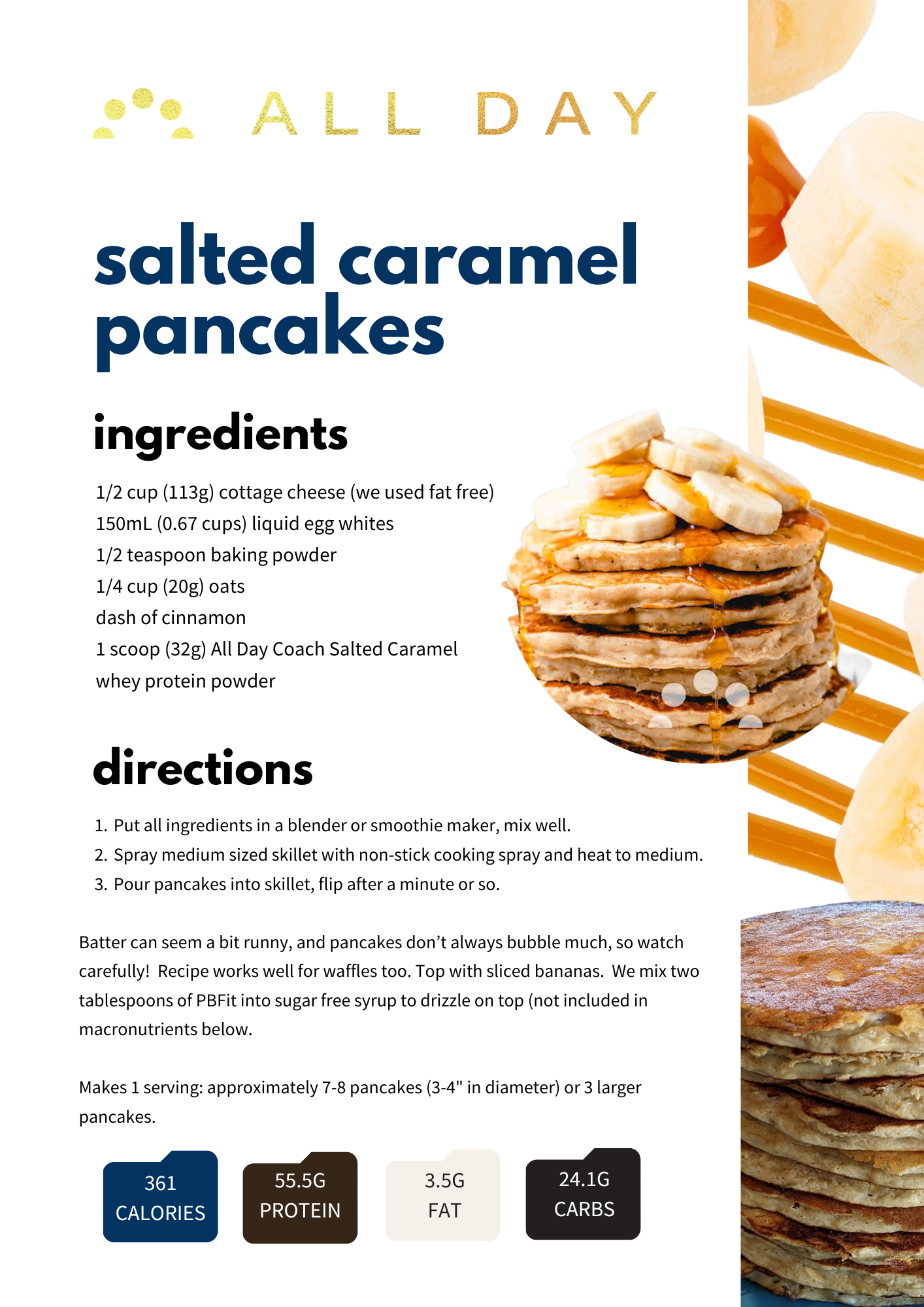
If you have a big dinner planned, try my protein pancakes for breakfast, or one of these "pre-game" meals to save your calories for the restaurant:
Breakfast: Non-fat Greek yogurt with 1/2 cup berries and a scoop of my All Day whey protein, or an Egg white omelet (add one real egg) with spinach and peppers
Lunch: Rotisserie chicken (no skin) or chicken breast over a massive bed of greens and your favorite veggies, or a Mission Carb Balance Tortilla with a ton of deli turkey or tuna, hummus, veggies and berries
Snack: Low-fat cottage cheese with an orange or pineapple, a protein shake, or a couple of hard boiled eggs, a beef stick/jerky and an apple.
The Bottom Line
Weight loss is about a consistent calorie deficit, but the secret to keeping it off is about hunger management. If you eat high-protein and high-fiber meals throughout the day, you'll arrive at the restaurant feeling in control—not starving. This allows you to make better choices and enjoy your lifestyle without the guilt.
Ready to stay on track this weekend?